
Tea & Pastry Tales
In leisure time, brew a pot of fine tea, slice the Fengting Cake into delicate pieces, sip the tea, and taste the pastry. The flavor seems to transcend thousands of years, allowing you to share this elegance and comfort with the ancients.
Fengting, China – An Enchanting Millennium-Old Town
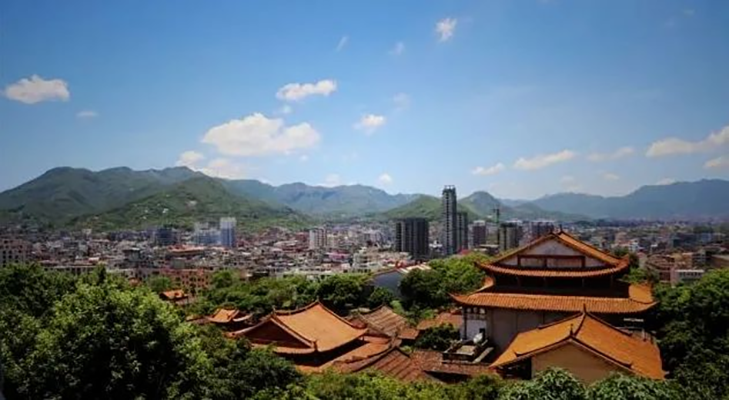
On the banks of Meizhou Bay along the southeastern coast of Fujian Province, lies Fengting, a millennium-old town steeped in history and culture. Like a bright pearl embedded at the junction of Putian, Xianyou, and Hui’an counties, it has long been a vital commercial hub and transportation pivot in the coastal area of central Fujian, renowned as “the major thoroughfare of the southeast.”
Profound Historical Origins
Fengting’s history dates back to the Western Han Dynasty. Legend has it that during the Yuanshou period of Emperor Wu of Han, nine brothers of the He family from Lujiang, Anhui, fled their home overnight to protest their father’s betrayal of the Han Dynasty and arrived at the southeastern coast. On the slopes of Tadou Mountain, they built a pavilion with maple branches and leaves to stay for the night. The beautiful legend of “building a pavilion with maples” has been passed down ever since, giving Fengting its name. Over the centuries, time has left deep marks on this land. As early as the Three Kingdoms period, administrative establishments were set up here; in the second year of Wude in the Tang Dynasty, Fengting Guan (an official post) was established. Though its name changed through the Song, Yuan, Ming, and Qing dynasties, it has always been a key center of regional politics, economy, and culture.
Throughout the long course of history, Fengting has nurtured numerous talented individuals and boomed with literary traditions. From the Song to the Qing Dynasty, 127 Jinshi (successful candidates in the highest imperial examinations) emerged here, including civil and military Zhuangyuan (top scorers), earning it the titles “Zoulu by the Sea” (a place of profound culture like the ancient states of Zou and Lu) and “Famous City of Literature and Documents.” Cai Xiang, a prominent minister of the Northern Song Dynasty, was a master of calligraphy and poetry. He not only wrote influential works such as Collected Works of Cai Zhonghui, Treatise on Lychees, and Treatise on Tea but also benefited the people during his tenure as a local official. The Luoyang Bridge he presided over constructing has become an outstanding masterpiece in the history of Chinese bridges. Additionally, Chen Hongjin, the Prince of Nankang in the Song Dynasty, stationed himself along the Fengjiang River, safeguarded the region and its people, and offered the two prefectures of Zhangzhou and Quanzhou to Emperor Taizu of Song, making significant contributions to the unification of China by the Song court. Furthermore, figures like Chen Qian, who was diligent in government affairs during the Ming Dynasty, Lin Lanyou, who was loyal and righteous, and Xue Tianyu, Dai Zhenheng, Dai Zhenlei, who were upright and beneficial to the people during the Qing Dynasty, their stories and achievements shine like bright stars in Fengting’s historical sky.
Brilliant and Unique Culture
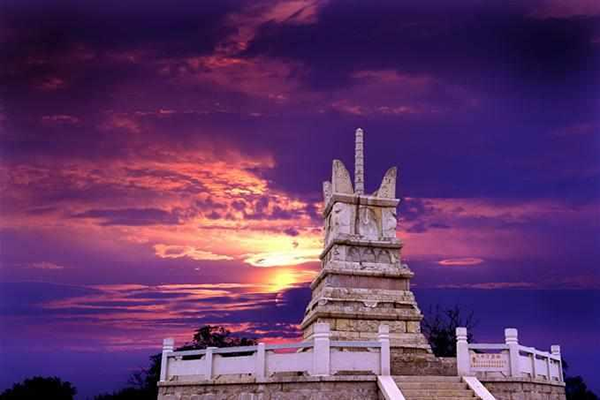
Fengting’s culture is rich and diverse, integrating the essence of Puxian culture and Quanzhou culture to form a distinctive regional culture. Among them, the national intangible cultural heritage “Fengting Lantern Festival Parade and Artistic Street Performance Custom” is widely renowned. This grand “lantern event” originated in the Song Dynasty and reached its peak of prosperity in the Ming Dynasty, described as “a night sky of fiery trees and silver flowers.” Every 15th day of the first lunar month, people from near and far gather on Fengting’s ancient streets to admire the dazzling lanterns. Craftsmen use bamboo strips as the frame and colored silk as the cover, transforming myths, legends, and historical stories into a flowing epic of light and shadow, immersing people in a dreamlike world. In addition to the lantern parade custom, Fengting is also home to provincial intangible cultural heritages such as the Lishan Palace Zaoli Dance and Fengting Water Pavilion, as well as municipal intangible cultural heritages including the Liuchun Festival, Dragon Drum Poetry, Dongzhai Temple Fair, and Huang’s Dough Sculpture. These cultural heritages are not only the crystallization of the wisdom of the Fengting people but also an important part of China’s traditional culture.
On this culturally rich land, food culture also glimmers brightly, with Fengting Cake being the most famous. As a traditional pastry of Fengting Town, Fengting Cake carries the millennium-old culinary memories of the ancient town. With a history dating back to the Song Dynasty, it has undergone centuries of precipitation and inheritance, with its production process continuously refined, becoming an essential gift for locals during festivals and when visiting relatives and friends.
The production of Fengting Cake is extremely exquisite. High-quality glutinous rice and white sugar are used as the main raw materials. The glutinous rice goes through multiple processes such as soaking, drying, and stir-frying before being ground into fine glutinous rice flour; the white sugar is boiled into syrup and mixed with the glutinous rice flour in a certain proportion. Subsequently, the mixed cake flour is put into a special wooden mold, gently tapped and compacted with a wooden mallet, and then sprinkled with a layer of auxiliary materials such as sesame seeds and crushed peanuts to enhance the rich taste. Finally, the wooden mold is placed in a steamer and steamed over high heat. Freshly steamed Fengting Cake is steaming hot, emitting an inviting aroma, with a snow-white color, a soft and delicate texture that melts in the mouth, sweet but not cloying, leaving a lingering aftertaste.
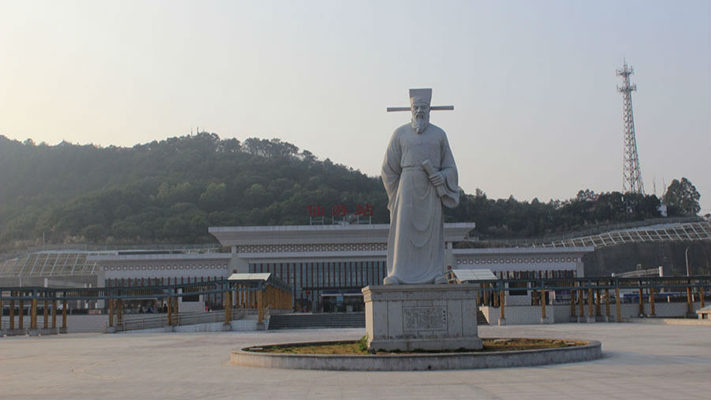
The wonderful matching culture of tea and Fengting Cake originated from Cai Xiang, the prominent minister of the Northern Song Dynasty who was born in Fengting. Legend has it that Cai Xiang, one of the Eight Great Prose Masters of the Tang and Song Dynasties, was extremely fond of tea tasting. One day in 1060, he was immersed in the leisurely time of tasting tea and practicing calligraphy when someone from his hometown brought him Fengting Cake. Cai Xiang put down his brush, tried a bite of the cake out of curiosity, and then took a sip of tea. In an instant, the fragrance of the tea and the sweetness and glutinousness of the cake blended in his mouth. The wonderful taste brought by this combination made him exclaim. Thus, this matching of tea and Fengting Cake quietly spread. Initially, this unique combination was only affordable for high-ranking officials and nobles, as neither high-quality tea nor exquisitely made Fengting Cake was easily accessible to ordinary families.
As time passed slowly and society developed, the middle class emerged, and they also had the ability to savor this unique delicacy. After thousands of years of spread, the combination of tea and Fengting Cake is no longer exclusive to a few; ordinary people can also enjoy this classic pairing. Today, it has become a habit for most people. In leisure time, brew a pot of fine tea, pair it with a piece of Fengting Cake, and quietly enjoy this comfort and beauty inherited for thousands of years.